Palace Predator: A Deep Dive into India’s Beloved Historical Action-Adventure Game
Welcome, chaps and lasses, to the ultimate guide on Palace Predator—the game that’s taken India’s mobile and PC gaming scene by storm since its launch in October 2023. Developed by Daman Games, a rising star in India’s本土 (local) game development industry, this action-adventure title isn’t just another run-of-the-mill game. It’s a love letter to India’s rich history, blending heart-pounding gameplay with stunning re-creations of some of the country’s most iconic palaces. Whether you’re a history buff, an action junkie, or just someone looking for a game that feels “close to home,” Palace Predator has something for everyone.
Now, you might be wondering—what makes Palace Predator stand out from the hundreds of games available on the Google Play Store or Steam? Well, for starters, it’s one of the few Indian games that puts our own history front and center. Instead of generic castles or foreign cities, you’ll be exploring the grand halls of Amber Fort, solving puzzles in Udaipur’s Lake Palace, and fighting off enemies in the narrow lanes of Delhi’s Red Fort. Every corner of the game is steeped in Indian culture, from the weapons your character wields (think khanda swords and banjara bows) to the clothes they wear (vibrant kurta pajamas and elegant saris for the female characters).
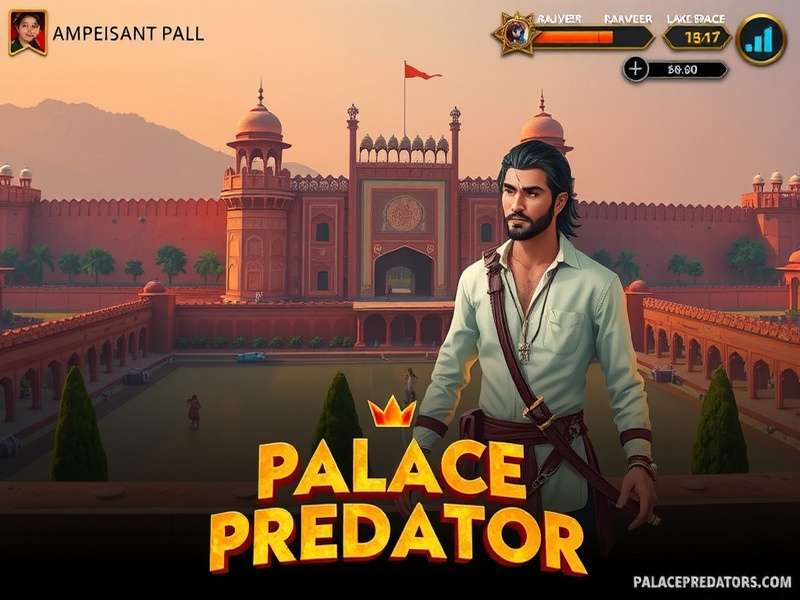
The main menu screen of Palace Predator, featuring the protagonist Rajveer and a stunning view of Jaipur’s Amber Fort.
Another thing that sets Palace Predator apart is its accessibility. Let’s be honest, not everyone in India has a high-end smartphone or a gaming PC. Daman Games knew this, so they optimized the game to run smoothly on even the most basic Android devices—think Redmi 9A or Realme C20. You don’t need 8GB of RAM or a fancy graphics card to enjoy Palace Predator; a 2GB RAM phone and 3GB of free storage space are enough. That’s why the game has crossed 500,000 downloads in India alone, with a 4.5-star rating on Google Play. Players from all walks of life—students, office workers, even senior citizens—have jumped on the Palace Predator bandwagon, and it’s easy to see why.
1. About Palace Predator
1.1 What Is Palace Predator?
At its core, Palace Predator is an action-adventure game with a heavy focus on history and exploration. The game’s story follows Rajveer, a young archaeologist who’s on a mission to uncover the secrets of his ancestors—who were once the guardians of a powerful artifact known as the Jewel of the Mughals. This jewel, said to hold the power to protect India’s historical heritage, has been stolen by Karan, a ruthless文物贩子 (artifact smuggler) who wants to sell it to the highest bidder. Rajveer’s journey takes him across six of India’s most famous palaces, each with its own set of challenges, puzzles, and enemies.
What makes Palace Predator unique is its blend of fact and fiction. While Rajveer and Karan are fictional characters, the palaces you explore are based on real historical sites. The development team at Daman Games worked closely with historians and archaeologists to ensure that every detail—from the architecture of the palaces to the clothes worn by the NPCs (non-playable characters)—is as accurate as possible. For example, the Amber Fort level includes the famous Sheesh Mahal (Mirror Palace) with its thousands of tiny mirrors, just like the real thing. Even the puzzles in the game are inspired by historical events; one mission requires you to decode a message written in Urdu calligraphy, just like the letters used by Mughal emperors.
1.2 Platforms & Availability
Palace Predator was first released for Android devices on October 15, 2023, exclusively on the Google Play Store. The iOS version followed on January 20, 2024, and the PC version (available on Steam) launched on March 5, 2024. The game is free to download and play, with optional in-app purchases (IAPs) for cosmetic items like character skins, weapon skins, and emotes. Importantly, Daman Games has stated that there are no “pay-to-win” elements in Palace Predator—all gameplay-related items (like weapons and skills) can be unlocked by playing the game, not by spending money. This has been a big hit with Indian players, who often complain about unfair IAPs in other mobile games.
Let’s take a look at the minimum and recommended system requirements for Palace Predator across different platforms:
| Platform | Minimum Requirements | Recommended Requirements |
|---|---|---|
| Android | Android 8.0 (Oreo), 2GB RAM, 3GB free storage, Quad-core 1.4GHz processor | Android 10.0+, 4GB RAM, 5GB free storage, Octa-core 2.0GHz processor |
| iOS | iOS 14.0+, iPhone 8 or later, 3GB free storage | iOS 15.0+, iPhone 11 or later, 5GB free storage |
| PC (Windows) | Windows 10, Intel Core i3-4160 or AMD FX-4350, 4GB RAM, NVIDIA GTX 650 or AMD Radeon HD 7750, 8GB free storage | Windows 10/11, Intel Core i5-8400 or AMD Ryzen 5 2600, 8GB RAM, NVIDIA GTX 1060 or AMD Radeon RX 580, 10GB free storage |
1.3 Core Features of Palace Predator
- Historical Accuracy: Explore re-created versions of India’s most famous palaces, with details verified by historians.
- Action-Packed Gameplay: Engage in hand-to-hand combat with traditional Indian weapons and use stealth to avoid enemies.
- Immersive Story: Follow Rajveer’s journey to recover the Jewel of the Mughals, with plot twists inspired by Indian history.
- Multiplayer Mode: Team up with friends (2-4 players) to complete co-op missions or compete in PvP (player vs. player) battles.
- Bilingual Support: Play the game in Hindi or English, with plans to add more regional languages (Telugu, Tamil, Bengali) in future updates.
- Festival Events: Participate in limited-time events during Indian festivals like Diwali, Holi, and Navratri, with exclusive rewards.
- Accessibility Options: Adjust difficulty levels, enable text-to-speech, and customize controls to suit your playstyle.
2. Palace Predator Gameplay: Action, Puzzles, and Exploration
If you’ve ever played games like Assassin’s Creed or Uncharted, you’ll feel right at home with Palace Predator’s gameplay—but with a distinct Indian twist. The game combines three core elements: combat, puzzle-solving, and exploration. Each level (set in a different palace) requires you to balance all three to progress, making the gameplay varied and never boring.
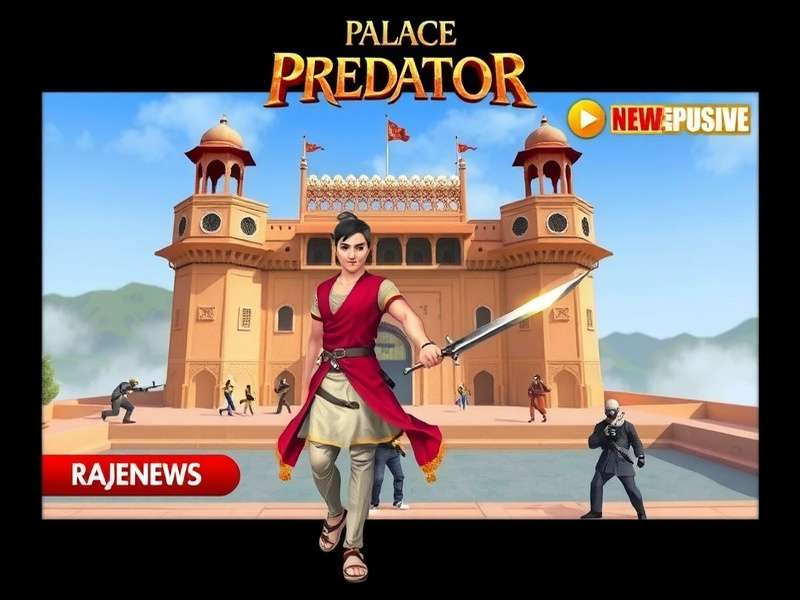
Rajveer engaging in combat with enemy smugglers in the Red Fort level of Palace Predator. Notice the traditional khanda sword he’s wielding!
2.1 Game Modes
Palace Predator offers three main game modes, each catering to different types of players:
2.1.1 Story Mode (Single-Player)
The story mode is the heart of Palace Predator, with 30 missions spread across six palaces. Each mission has a specific objective—like finding a hidden artifact, rescuing an NPC, or defeating a boss. The story unfolds through cutscenes (short videos) and dialogue between Rajveer and other characters. For example, in the first mission (set in Amber Fort), you’ll learn about Rajveer’s family history and the importance of the Jewel of the Mughals. As you progress, you’ll unlock new weapons, skills, and parts of the palace to explore.
One of the best things about the story mode is its pacing. It doesn’t throw you into difficult battles right away; instead, it eases you into the gameplay with simple puzzles and small enemy encounters. By the time you reach the fifth palace (the Lake Palace in Udaipur), you’ll be a pro at using stealth to avoid guards and solving complex puzzles involving water机关 (mechanisms) and light reflections.
2.1.2 Multiplayer Mode (Co-op & PvP)
Once you’ve completed a few story missions, you’ll unlock the multiplayer mode. This mode has two options:
- Co-op Missions: Team up with 1-3 friends to complete special missions that are more challenging than the story mode. For example, one co-op mission requires you to raid a smuggler’s hideout in the Mehrangarh Fort and recover a stolen painting. You’ll need to work together—one player might distract the guards, while another solves a puzzle, and the third fights off enemies.
- PvP Battles: Compete against other players in 2v2 or 4v4 battles in small, palace-themed arenas. The goal is to collect the most “treasure coins” within 5 minutes. You can use the same weapons and skills from the story mode, so it’s a great way to test your skills against real players. The top players each week get rewards like exclusive skins or in-game currency.
The multiplayer mode uses dedicated servers located in India (in cities like Bangalore, Mumbai, and Delhi), which means low latency for most Indian players. You won’t have to deal with the lag that’s common in international games—something that’s been praised heavily in player reviews.
2.1.3 Survival Mode
Survival mode is for players who love a challenge. In this mode, you’re trapped in a part of a palace and have to fight off waves of enemies (smugglers, guards, even wild animals like tigers in the Amber Fort level) for as long as possible. Each wave gets harder, with more enemies and stronger bosses. The longer you survive, the more rewards you get. Survival mode is a great way to farm in-game currency (called rupiyas) to upgrade your weapons and skills.
2.2 Combat System
Combat in Palace Predator is fast-paced and satisfying, with a focus on traditional Indian weapons. Unlike many action games that rely on guns, Palace Predator’s combat is mostly melee-based—though you do get access to ranged weapons like bows and arrows later in the game.
Let’s take a look at the main weapons available in Palace Predator:
| Weapon Type | Examples | Strengths | Weaknesses |
|---|---|---|---|
| Melee (Swords) | Khanda (double-edged sword), Talwar (curved sword), Khukuri (Nepali knife) | High damage, good for close combat, can block enemy attacks | Short range, slow attack speed |
| Melee (Blunt) | Gada (mace), Lathi (stick), Tabar (axe) | Can stun enemies, effective against armored foes | Very slow, low accuracy |
| Ranged | Bow and Arrow, Shuriken (throwing stars), Slingshot | Long range, can attack enemies from stealth | Low damage, limited ammo |
The combat controls are simple and intuitive. On mobile, you use a virtual joystick on the left to move Rajveer and buttons on the right to attack, block, and dodge. On PC, you use the WASD keys to move and the mouse to aim and attack. You can also perform special moves (called ultimates) once your energy bar is full. For example, the Khanda Rush ultimate lets you charge at enemies and deal massive damage with your sword.
Stealth is also a big part of the combat system. If you don’t want to fight every enemy, you can sneak around using tall grass, pillars, or shadows to hide. You can also perform stealth takedowns—quietly eliminating enemies from behind without alerting others. This is especially useful in missions where you need to avoid detection, like when you’re stealing a document from a guard’s office.
2.3 Puzzle-Solving
Puzzles are another key part of Palace Predator’s gameplay, and they’re all inspired by Indian history and culture. Unlike some games where puzzles feel like a chore, Palace Predator’s puzzles are fun and rewarding—they make you feel like you’re actually uncovering a historical secret.
Here are some examples of puzzles you’ll encounter in the game:
- Mirror Puzzle (Amber Fort): In the Sheesh Mahal, you need to adjust mirrors to reflect sunlight onto a stone tablet. The tablet then reveals a code that opens a hidden door. This puzzle is based on the real Sheesh Mahal’s mirror decorations, which were designed to reflect light in beautiful ways.
- Urdu Code Puzzle (Red Fort): You find a letter written in Urdu calligraphy. You need to match the Urdu letters to Hindi letters (using a reference sheet provided in the game) to decode the message. The message tells you where to find a key to a treasure chest.
- Water Mechanism Puzzle (Lake Palace): The Lake Palace is built on an island, and many of its rooms are flooded. You need to turn valves in the correct order to drain the water and access a hidden chamber. This puzzle is inspired by the real Lake Palace’s water management system, which was used to keep the palace cool in summer.
If you get stuck on a puzzle, you can use a hint (you get three hints per mission for free). Hints don’t give you the answer directly—they just point you in the right direction. For example, a hint for the mirror puzzle might say, “Look at the position of the sun in the sky—this will tell you which mirror to adjust first.”
2.4 Progression System
Palace Predator has a deep progression system that keeps you motivated to keep playing. As you complete missions, defeat enemies, and solve puzzles, you earn three things:
- Experience Points (XP): XP helps you level up Rajveer. Each time you level up, you get a skill point that you can use to unlock or upgrade skills. Skills include things like Stealth Mastery (makes you harder to detect) and Sword Proficiency (increases damage with swords).
- Rupiyas: The game’s main currency. You can use rupiyas to buy new weapons, upgrade existing weapons (to increase damage or speed), and buy consumables like health potions.
- Collectibles: There are three types of collectibles in the game—Historical Artifacts (like old coins or paintings), Family Letters (which give more backstory about Rajveer’s family), and Secret Maps (which unlock hidden areas in the palaces). Collecting all of them gives you a special reward, like an exclusive character skin.
The progression system is well-balanced—you never feel like you’re grinding for hours to unlock something. Even if you only play for 30 minutes a day, you’ll make steady progress. This is perfect for Indian players who often have busy schedules and can’t spend hours gaming every day.
3. Palace Predator Characters: Heroes, Villains, and Allies
Palace Predator’s characters are one of its biggest strengths. Unlike many games where characters feel flat and uninteresting, Palace Predator’s cast is well-developed, with backstories that tie into India’s history. Each character has a unique personality, appearance, and role in the story—making the game’s narrative feel more immersive.
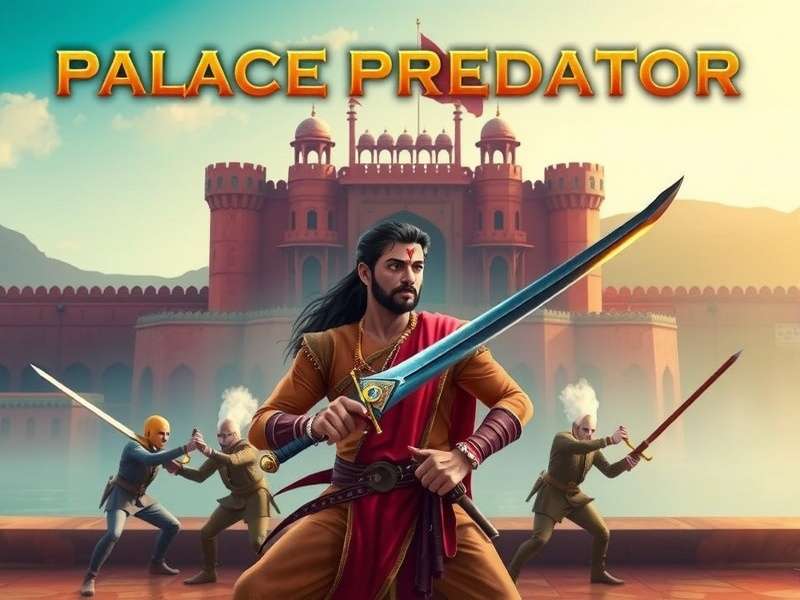
The main characters of Palace Predator (from left to right): Rajveer (protagonist), Rani Meera (ally), Dr. Arjun (mentor), and Karan (antagonist).
3.1 Protagonist: Rajveer
Rajveer is the hero of Palace Predator, and he’s a character that many Indian players can relate to. He’s a 28-year-old archaeologist from Jaipur, with a passion for Indian history and a strong sense of justice. Rajveer’s grandfather was once the chief guardian of the Jewel of the Mughals, but he was killed by smugglers when Rajveer was a child. This tragedy is what drives Rajveer to become an archaeologist—to protect India’s heritage from people who want to exploit it.
Appearance-wise, Rajveer is tall and athletic, with short black hair and a small beard. He wears a traditional kurta pajama (usually in shades of blue or green) with a nehru jacket and a turban (when he’s in the palaces). His outfit isn’t just for show—it’s practical too. The kurta is loose, allowing him to move freely during combat, and the turban can be used to hide his face when he’s sneaking around.
Personality-wise, Rajveer is brave, intelligent, and humble. He’s not the type to brag about his skills, but he’s more than willing to stand up for what’s right. He’s also a bit of a history nerd—he often stops to explain interesting facts about the palaces to the other characters (and to the player!). For example, when he’s exploring the Red Fort, he’ll say, “Did you know this fort was built by Shah Jahan in 1639? It took over 10 years to complete!” These little details make Rajveer feel like a real person, not just a game character.
As the player, you’ll control Rajveer throughout the game. You can customize his appearance with different skins (unlocked through missions or events), but his personality and backstory remain the same. This customization lets you put your own spin on the character while keeping the story intact.
3.2 Antagonist: Karan
Every good hero needs a good villain, and Karan is one of the best villains in Indian mobile gaming. He’s a 45-year-old文物贩子 (artifact smuggler) from Delhi, with a reputation for being ruthless and cunning. Karan’s goal is to collect India’s most valuable historical artifacts and sell them to wealthy collectors overseas. He’s already stolen dozens of artifacts, including a 17th-century painting from the Taj Mahal and a bronze statue from a temple in Tamil Nadu.
What makes Karan a great villain is that he’s not just “evil for the sake of evil.” He has a backstory that explains his motives. Karan’s father was a poor farmer who couldn’t afford to pay for Karan’s education. When Karan was a teenager, his father died, and Karan had to drop out of school to support his family. He turned to smuggling because it was the only way he could make enough money to take care of his mother and sister. Over time, he became greedy and forgot his original motives—now, he only cares about power and money.
Appearance-wise, Karan is short and stocky, with a shaved head and a scar on his left cheek (from a fight with a guard during a smuggling operation). He wears expensive Western clothes—like a black suit and tie—even when he’s in the palaces. This contrast between his Western attire and the traditional setting of the palaces makes him stand out as an outsider who doesn’t respect India’s heritage.
Karan is a tough boss to beat. He appears in three missions throughout the story mode, and each time he’s harder to defeat. In the first encounter (in Amber Fort), he fights with a gun (a rare weapon in the game). In the second encounter (in the Red Fort), he has two bodyguards who fight alongside him. In the final encounter (in the Taj Mahal’s gardens), he uses a special weapon—a chakra (a circular blade) that he can throw at Rajveer.
3.3 Allies & NPCs
Rajveer isn’t alone in his quest—he has help from a cast of memorable allies and NPCs. These characters provide him with information, missions, and support throughout the game.
3.3.1 Rani Meera
Rani Meera is a 26-year-old descendant of the royal family that once owned the Lake Palace in Udaipur. She’s a skilled fighter and a expert in Indian history—making her the perfect ally for Rajveer. Meera first meets Rajveer when he breaks into the Lake Palace to look for clues about the Jewel of the Mughals. At first, she thinks he’s a smuggler and attacks him, but once she realizes he’s trying to protect the jewel, she joins his team.
Meera wears a vibrant sari (usually in shades of pink or orange) with a mangalsutra (a necklace worn by married Indian women—though Meera isn’t married; she wears it as a family heirloom). She fights with a talwar (curved sword) and is faster than Rajveer, making her great at dodging enemy attacks.
Personality-wise, Meera is strong-willed, independent, and a bit stubborn. She doesn’t take orders from anyone—including Rajveer—and often argues with him about the best way to approach a mission. But deep down, she cares about Rajveer and the cause they’re fighting for. She’s also a feminist—she often speaks out against the idea that women can’t be warriors or archaeologists, which is a nice touch that resonates with many female players.
3.3.2 Dr. Arjun
Dr. Arjun is Rajveer’s mentor and a retired archaeologist. He’s 65 years old, with white hair and a long beard, and he wears a simple dhoti kurta and glasses. Dr. Arjun knew Rajveer’s grandfather and was the one who told Rajveer about the Jewel of the Mughals. He doesn’t join Rajveer on his missions (he’s too old to fight), but he provides support from afar—sending Rajveer information about the palaces and the smugglers via phone calls and text messages.
Dr. Arjun is the “wise old man” of the game, and he’s full of interesting facts about Indian history. For example, when Rajveer is exploring the Mehrangarh Fort, Dr. Arjun calls him and says, “Mehrangarh Fort is one of the largest forts in India. It was built in 1459 by Rao Jodha, the founder of Jodhpur. Keep an eye out for the handprints of the queens who committed sati there—they’re still visible on the walls.” These little bits of information add depth to the game and teach players about Indian history without feeling like a lecture.
3.3.3 Other NPCs
There are dozens of other NPCs in Palace Predator, each with their own unique stories. Some examples include:
- Ram: A guide at the Amber Fort who helps Rajveer find a hidden passage. He’s a friendly old man who loves telling stories about the fort’s history.
- Priya: A journalist who’s investigating Karan’s smuggling ring. She gives Rajveer information about Karan’s next move in exchange for an exclusive interview.
- Guard Ravi: A corrupt guard who works for Karan. He’ll attack Rajveer on sight, but if you can sneak up on him, you can interrogate him for information.
What’s great about these NPCs is that they’re not just there to give you missions—they feel like part of the game’s world. Talking to them can give you extra XP, rupiyas, or even hints about hidden collectibles. Some NPCs even have side quests (small missions) that you can complete for extra rewards. For example, Ram might ask you to find his lost glasses in the Amber Fort, and if you do, he’ll give you a map to a hidden treasure chest.
4. Palace Predator Game World: Exploring India’s Iconic Palaces
The game world of Palace Predator is one of its most impressive features. Instead of generic fantasy worlds or foreign cities, the game is set in six of India’s most famous palaces and forts—each re-created with stunning detail. The development team at Daman Games spent months visiting these sites, taking photos, and talking to historians to ensure that every corner of the game world is as accurate as possible. The result is a game world that feels both familiar and exciting—you’ll recognize the palaces from photos or visits, but you’ll also discover hidden areas that most tourists never get to see.
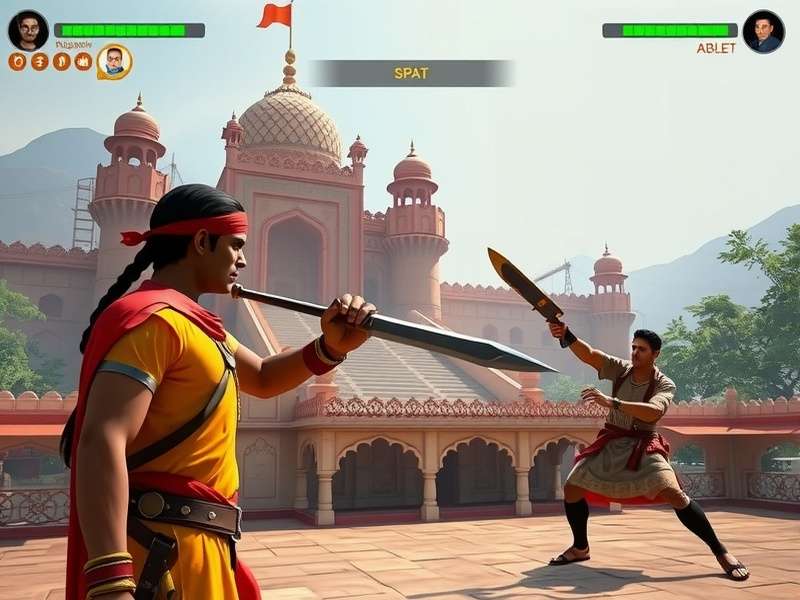
The Lake Palace level in Palace Predator, showing the palace’s stunning architecture and the surrounding lake. The game’s graphics are optimized to run smoothly on low-end devices without losing detail.
4.1 The Six Palaces & Forts
Each palace in Palace Predator has its own unique layout, challenges, and secrets. Let’s take a closer look at each one:
4.1.1 Amber Fort (Jaipur, Rajasthan)
The first palace you’ll explore in Palace Predator is the Amber Fort, located just outside Jaipur. This 16th-century fort is one of Rajasthan’s most famous landmarks, known for its red sandstone walls and stunning Sheesh Mahal (Mirror Palace). In the game, the Amber Fort is divided into five areas:
- Main Entrance: A large courtyard with a fountain and several guard towers. This is where you’ll have your first combat encounter with Karan’s smugglers.
- Sheesh Mahal: A room covered in thousands of tiny mirrors. This is where you’ll solve the mirror puzzle to unlock the next area.
- Armory: A room filled with old weapons (swords, maces, bows) that you can loot for supplies. There’s also a hidden passage here that leads to the royal chambers.
- Royal Chambers: The former home of the Amber Fort’s royal family. This area has several bedrooms, a dining hall, and a study. You’ll find a family letter (a collectible) here that gives more backstory about Rajveer’s grandfather.
- Secret Tunnel: A dark, narrow tunnel that leads out of the fort. This is where you’ll have your first boss fight with Karan’s right-hand man, Vikram.
The Amber Fort level is designed to introduce you to the game’s core mechanics—exploration, combat, and puzzle-solving. It’s not too difficult, but it’s still fun and engaging. The highlight of this level is the Sheesh Mahal—when you solve the mirror puzzle, the mirrors reflect sunlight to create a rainbow effect that’s truly breathtaking.
4.2.2 Red Fort (Delhi)
The second palace in the game is the Red Fort, located in the heart of Delhi. Built by Mughal emperor Shah Jahan in the 17th century, this fort is a UNESCO World Heritage Site and one of India’s most important historical landmarks. In Palace Predator, the Red Fort is divided into six areas:
- Laal Qila Gate: The main entrance to the fort, guarded by Karan’s men. You’ll need to use stealth to sneak past the guards here.
- Chatta Chowk: A covered market area where you’ll find NPCs who can give you side quests. You’ll also need to solve a puzzle here involving old coins to unlock a treasure chest.
- Diwan-i-Aam: A large hall where the Mughal emperor used to meet with common people. This is where you’ll have a big combat encounter with a group of smugglers.
- Diwan-i-Khas: A smaller hall where the emperor met with nobles and foreign dignitaries. This area has a beautiful marble throne and a hidden safe that contains a clue about the Jewel of the Mughals.
- Royal Baths: A series of rooms with pools and fountains. You’ll need to solve a water puzzle here to drain the pools and access a hidden passage.
- Fort Gardens: A large garden with trees, flowers, and a small lake. This is where you’ll have your second boss fight with Karan (this time with his bodyguards).
The Red Fort level is more challenging than the Amber Fort, with more enemies and harder puzzles. It’s also one of the most historically accurate levels in the game—even the inscriptions on the walls of the Diwan-i-Khas are the same as the real ones. The highlight of this level is the Diwan-i-Khas—when you enter the hall, the camera pans up to show the marble throne, and Dr. Arjun calls you to explain its history. It’s a moment that makes you feel like you’re actually standing in the real Red Fort.
4.1.3 Lake Palace (Udaipur, Rajasthan)
The third palace in the game is the Lake Palace, located on an island in Lake Pichola in Udaipur. Built in the 18th century, this palace is known for its white marble walls and stunning views of the lake. In Palace Predator, the Lake Palace is divided into seven areas:
- Boat Dock: The area where you arrive at the palace (you take a boat from the mainland). You’ll meet Rani Meera here for the first time.
- Main Hall: A large room with chandeliers and marble floors. This is where you’ll have a cutscene with Meera, who explains the history of the palace.
- Bedrooms: Several rooms with four-poster beds and silk curtains. You’ll find a collectible (a old painting) in one of the bedrooms.
- Kitchen: A small room with old stoves and storage cabinets. You’ll need to find a key here to unlock the next area.
- Basement: A dark, damp area under the palace. This is where you’ll solve the water mechanism puzzle to drain the flooded rooms.
- Roof: The top of the palace, with a view of Lake Pichola. You’ll need to climb ladders to get here, and you’ll have a combat encounter with guards on the way.
- Secret Chamber: A hidden room under the palace that contains a clue about the Jewel of the Mughals. This is where you’ll have a boss fight with a giant crocodile (a fictional enemy, but it adds excitement to the level).
The Lake Palace level is one of the most beautiful in the game, with its white marble walls and blue lake. The water effects are particularly impressive—when you walk near the lake, you can see your reflection in the water, and when it rains (a random weather event), the water ripples. The highlight of this level is the secret chamber—when you unlock it, you’ll find a map that shows the location of the next palace (Mehrangarh Fort).
4.1.4 Mehrangarh Fort (Jodhpur, Rajasthan)
The fourth palace in the game is the Mehrangarh Fort, located on a hilltop in Jodhpur. Built in the 15th century, this fort is one of the largest in India and is known for its thick walls and stunning views of the city. In Palace Predator, the Mehrangarh Fort is divided into eight areas:
- Hilltop Entrance: The main entrance to the fort, located at the top of a hill. You’ll need to climb a series of stairs to get here, and you’ll have to fight off enemies along the way.
- Weapon Museum: A room filled with old weapons (swords, guns, cannons) that you can loot for supplies. There’s also a puzzle here involving cannons—you need to fire a cannon at a wall to break it and access the next area.
- Queen’s Quarters: A series of rooms where the fort’s queens used to live. You’ll find a family letter here that gives more backstory about Meera’s family.
- Watchtowers: Several tall towers that you can climb to get a view of the surrounding area. You’ll need to use a bow and arrow to take out enemies in other watchtowers.
- Dungeon: A dark, scary area where prisoners were kept. You’ll need to solve a puzzle involving torches to light your way and unlock the door to the next area.
- Treasure Room: A room filled with gold, silver, and jewels. You’ll find a collectible (a diamond necklace) here, but you’ll have to fight off a group of smugglers to get it.
- Royal Library: A room filled with old books and manuscripts. You’ll need to solve a puzzle involving a book cipher to decode a message about the Jewel of the Mughals.
- Fort Courtyard: A large open area where you’ll have your third boss fight with Karan’s right-hand man, Vikram (this time with a sword instead of a gun).
The Mehrangarh Fort level is one of the most challenging in the game, with steep stairs, narrow passages, and lots of enemies. The fort’s thick walls also mean that there are fewer places to hide, so you’ll have to rely more on combat than stealth. The highlight of this level is the weapon museum—when you fire the cannon, the wall breaks with a loud explosion, and you can see the dust and debris fly. It’s a satisfying moment that makes you feel like you’re actually destroying a part of the fort.
4.1.5 Chittorgarh Fort (Chittorgarh, Rajasthan)
The fifth palace in the game is the Chittorgarh Fort, located in southern Rajasthan. Built in the 7th century, this fort is one of India’s oldest and largest forts, and it’s known for its history of bravery and sacrifice (it was the site of several battles and sati ceremonies). In Palace Predator, the Chittorgarh Fort is divided into nine areas:
- Main Gate: A large gate with thick walls and a drawbridge. You’ll need to lower the drawbridge to get into the fort.
- Victory Tower: A tall tower that you can climb to get a view of the entire fort. You’ll need to solve a puzzle involving the tower’s stairs to reach the top.
- Kirti Stambh: A smaller tower dedicated to the Hindu god Vishnu. You’ll find a collectible (a statue of Vishnu) here.
- Rana Kumbha Palace: The former home of Rana Kumbha, a famous ruler of Mewar. This area has several rooms, including a throne room and a bedroom. You’ll need to solve a puzzle involving the throne to unlock a hidden passage.
- Padmini’s Palace: A palace dedicated to Rani Padmini, a famous queen of Chittorgarh. This area has a beautiful pool and a mirror room. You’ll have a cutscene here where Meera tells you the story of Rani Padmini.
- Fort Walls: A series of walls that surround the fort. You’ll need to walk along the walls to get to the next area, and you’ll have to fight off enemies who are patrolling the walls.
- Water Reservoirs: Several large reservoirs that were used to store water for the fort. You’ll need to solve a puzzle involving the reservoirs to get water for a dry fountain (which unlocks a hidden door).
- Secret Cave: A cave under the fort that leads to the next area. You’ll need to use a torch to light your way, and you’ll have to fight off bats and spiders.
- Final Courtyard: A large open area where you’ll have your fourth boss fight with Karan (this time with a chakra).
The Chittorgarh Fort level is one of the most historically significant in the game, with references to real events like the siege of Chittorgarh and the story of Rani Padmini. The level is also one of the most emotional—when you’re in Padmini’s Palace, Meera tells you about how Rani Padmini sacrificed herself to avoid being captured by enemies, and you can’t help but feel a sense of respect for India’s history. The highlight of this level is the Victory Tower—when you reach the top, you can see the entire fort and the surrounding countryside, and it’s a beautiful sight.
4.1.6 Taj Mahal Gardens (Agra, Uttar Pradesh)
The sixth and final palace in the game is the Taj Mahal Gardens, located in Agra. While the Taj Mahal itself isn’t a palace (it’s a mausoleum), the game includes its gardens as the final level because it’s one of India’s most famous landmarks. In Palace Predator, the Taj Mahal Gardens is divided into ten areas:
- Main Entrance: The main gate to the Taj Mahal Gardens, guarded by Karan’s men. You’ll need to use stealth to sneak past the guards here.
- Long Walkway: A long path lined with trees and fountains that leads to the Taj Mahal. You’ll have to fight off enemies along the way.
- Central Fountain: A large fountain in the center of the gardens. You’ll need to solve a puzzle involving the fountain to unlock the next area.
- Flower Beds: Several beds filled with roses and other flowers. You can hide in the flower beds to avoid enemies.
- Side Gardens: Two smaller gardens on either side of the main walkway.